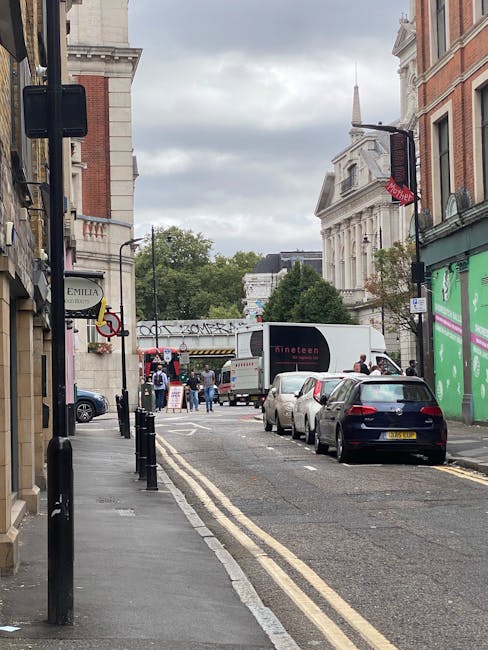
Permits for moving vans on Wimbledon streets -- Merton rules
Planning a move in Wimbledon can feel straightforward right up until the van arrives and the street gets tight, the bays are full, and everyone suddenly notices the loading signs. That is usually when the real question comes up: do you need a permit for moving vans on Wimbledon streets under Merton rules? The short answer is that it depends on where you park, how long you stay, and whether your vehicle is loading, unloading, or effectively waiting on the road. This guide breaks it down in plain English so you can plan properly and avoid a last-minute scramble.
In practice, good moving-day planning is about more than just the van. You need to think about access, timing, local restrictions, neighbour access, and the risk of a ticket or a tow if you get it wrong. If you are organising a man and van move, booking a larger moving truck, or arranging a full house relocation through house removals, the permit question should be on your checklist from day one. It saves headaches. Sometimes a lot of them.
Below, you will find a practical breakdown of how these permits usually work in Merton, when they matter most on Wimbledon streets, what to check before moving day, and the common mistakes that catch people out. Let's face it, moving is already stressful enough without adding a parking dispute into the mix.
Table of Contents
- Why permits for moving vans on Wimbledon streets matter
- How the permit process works in practice
- Key benefits and practical advantages
- Who needs this and when it makes sense
- Step-by-step guidance
- Expert tips for smoother loading and unloading
- Common mistakes to avoid
- Tools, resources and recommendations
- Law, compliance and best practice
- Options and comparison table
- Case study or real-world example
- Practical checklist
- Conclusion
- Frequently asked questions
Why Permits for moving vans on Wimbledon streets -- Merton rules Matters
Wimbledon streets are not all built the same. Some are broad enough for a short stop without drama; others are narrow, busy, or lined with parked cars on both sides. That makes a moving van very different from a normal car. A large van or truck can block traffic, obstruct sight lines, or sit in a restriction zone where parking is limited even for a quick job.
That is why permit planning matters. If the vehicle is parking on-street to load or unload, Merton's local restrictions may apply, and those restrictions can change from one road to the next. A bay that looks convenient may need a pay-and-display ticket, a loading exemption, or some kind of permission, depending on the exact location and the time of day. A neighbour once told me they were sure "it'll be fine for ten minutes"; it wasn't fine, and the timing turned into a very expensive ten minutes indeed.
There is also the practical side. If you do not secure the right access, your movers may have to park far away and carry furniture down the road. That sounds minor until you are moving a sofa, a mattress, and three boxes of books in light rain at 7:30 in the morning. Wimbledon weather has a sense of humour, apparently.
For people moving in flats, terraced houses, or converted homes, the margin for error is small. If your route includes busy local roads, time-restricted bays, or residents' parking zones, it is worth treating the permit question as part of the move itself rather than an afterthought. It can influence the vehicle size, the arrival time, and even whether you need to book flat removals support instead of a simple smaller van service.
How Permits for moving vans on Wimbledon streets -- Merton rules Works
The exact permit route depends on where the van will stop and for how long. In broad terms, you are trying to make sure the vehicle can legally load or unload near the property without causing an obstruction or breaching local parking controls. In many London boroughs, including Merton, the rules often come down to the street markings, the type of bay, and whether the move is happening on a weekday, evening, or weekend.
Here is the practical way to think about it:
- Loading only: If the van is actively loading or unloading, there may be limited allowance in some places, but it is not automatic and it is not universal.
- Parking in a controlled bay: A dedicated bay may require a permit or payment, even if the stop is short.
- Waiting on a yellow line: This can be risky unless the location and activity qualify under a specific exemption.
- Resident-only streets: These often need a much closer check because the rules can be stricter than people expect.
What catches people out is assuming that "moving day" itself gives a free pass. Usually, it does not. Even where loading is allowed, the driver may still need to keep to the conditions of the street. If the van is left unattended for too long, or if the crew is not actively moving items, the situation can change fast.
For moves with more furniture, awkward access, or several trips, it may be better to use a service with a larger vehicle and proper planning built in, such as removal van hire or a full removals package. That way the access plan is considered before anyone starts lifting boxes.
One small but important detail: if your property is in a block of flats or a busy residential street, ask yourself where the van will actually stand while the crew works. Not where you hope it will stand. Where it can legally stand. That is the difference between a smooth day and a long one.
Key Benefits and Practical Advantages
Getting the parking and permit side right gives you more than just compliance. It improves the move itself.
- Less delay: The van can park closer to the door, which saves time and reduces carrying distance.
- Lower risk of penalties: You avoid unnecessary fines or wardens interrupting the job.
- Better handling of fragile items: Shorter walking distances make it easier to manage delicate items safely.
- Less stress for neighbours: Thoughtful access planning reduces inconvenience on a narrow street.
- More accurate scheduling: Movers can estimate the job more realistically when access is sorted.
There is also a knock-on effect on safety. A van parked legally and sensibly lets the crew work more calmly. No rushing. No carrying a wardrobe around two corners because the nearest bay is blocked. That matters, especially for bigger items like beds, wardrobes, or pianos. If you have specialist items, it may be worth checking piano removals or furniture removals options so the access setup matches the load.
And yes, it can protect your budget too. The cheapest-looking move is not always the cheapest once you factor in extra labour, parking issues, repeated trips, or last-minute changes. Truth be told, good access planning often pays for itself in reduced friction.
Who This Is For and When It Makes Sense
Permit planning is not just for huge house moves. It matters for a surprising range of situations in Wimbledon.
- Home movers: If you are moving into or out of a house with limited curb space.
- Flat movers: Especially where there are narrow access roads, shared entrances, or time-limited bays.
- Students: Smaller loads still need somewhere legal and practical to stop.
- Office relocations: These often involve more boxes, more time, and a need to keep business disruption low.
- Same-day or urgent moves: When everything is tight, access planning becomes even more important.
If you are handling a business relocation, the parking issue can become a logistics issue very quickly. That is where office removals or commercial moves support can be useful, because the move may need staged loading, timed arrival, or a larger vehicle. For smaller homes, you may find a flexible man with van approach is enough, but only if the street allows it.
It also makes sense for people in shared properties. In a row of terraced homes, one blocked street can mean everybody notices. You might be moving a couch, but the whole road feels it. That is why a quick access check is worth the effort.
Step-by-Step Guidance
Here is a sensible way to handle permits and access for a moving van on Wimbledon streets.
- Check the exact street and bay layout. Do not rely on the postcode alone. One end of a road can have different restrictions from the other.
- Work out your vehicle size. A small van may fit where a larger truck will not. If in doubt, plan for the bigger footprint.
- Decide whether the stop is loading only or longer-term parking. That distinction affects what kind of permission may be needed.
- Build in time for access. A move that looks like two hours can become three if the van must park further away.
- Confirm the move date and time. Peak traffic periods can complicate matters, especially near busier Wimbledon routes.
- Brief the movers. Let them know about steps, narrow gates, lift access, and anything that could slow unloading.
- Have a backup plan. If the ideal space is not available, know the nearest workable alternative in advance.
If you are collecting boxes, wrapping furniture, or organising fragile items, it is also sensible to prepare early with packing and boxes or packing and unpacking services. Better packing means faster loading, and faster loading usually means less time on the street. Which, frankly, is the whole point.
A real-world example: a first-floor flat move in Wimbledon can look easy on paper, but if the van can only stop two houses away, the labour increases fast. The permit question is not a formality there; it is part of the job design.
Expert Tips for Better Results
After many local moves, the same few habits make the biggest difference.
- Plan for the worst parking case, then improve from there. If you can secure a better space, great. If not, the move still works.
- Keep the access route clear. Wheelie bins, bikes, and random garden furniture can slow everything down more than you expect.
- Use the quietest workable time slot. Early mornings often help, but only if the street restrictions allow it.
- Keep paperwork and contacts handy. If there is any permit or confirmation involved, you do not want to be searching through emails while someone waits by the van.
- Think about unloading order. Put the essentials at the back or top where they can come out first.
There is a slightly nerdy but very useful trick: walk the route from the van to the front door before move day if you can. Steps, slopes, tight gates, wet paving, odd corners - all the little things show up once you physically stand there. It is amazing how different a street looks when you are holding a tape measure and not just a takeaway coffee.
For bulkier moves, a larger vehicle may be cheaper overall than multiple small trips. In some cases, a removal truck hire arrangement is actually the better fit, provided the street can accommodate it. That is not always the glamorous answer, but it is often the right one.
Common Mistakes to Avoid
Most moving problems around Wimbledon streets come from a handful of avoidable mistakes.
- Assuming all loading is allowed. Local restrictions still matter even on moving day.
- Not checking the exact street markings. The sign closest to the property is the one that counts, not the one you remember from last week.
- Booking the wrong-sized vehicle. A van that is too small can create more parking hassle than a correctly planned larger one.
- Leaving it until the last minute. Permit and access planning works best when it is not rushed.
- Forgetting about flats and shared access. A building entrance, lift, or shared driveway can create a bottleneck.
- Ignoring neighbour space. If everyone else in the street needs room too, tension rises quickly.
One mistake that looks minor but causes real pain is underestimating how long loading will take. If the van has to move twice because the first stop was not legal or practical, you lose time, momentum, and patience. Nobody enjoys that, least of all the person trying to direct a sofa through a doorway at an awkward angle.
Tools, Resources and Recommendations
You do not need a complicated toolkit, but a few practical items make the whole process easier.
- Measuring tape: Check furniture dimensions and door widths before moving day.
- Floor plan or rough sketch: Helpful for deciding where large items should go first.
- Labels and marker pens: Keep room-by-room boxes organised, especially for flats or offices.
- Temporary protection: Blankets, covers, and wrap help protect the van and the furniture.
- Timetable: Keep a simple written schedule for loading, key handover, and arrival windows.
For planning around access, it is also wise to choose a service that matches the scale of the move. Smaller domestic moves often suit home moves or student removals, while business premises usually need a more structured approach. If you are not sure, a service page like removal services can help you compare what level of support is appropriate.
And if you need somewhere to keep items temporarily because access timing is awkward, storage can take some pressure off the day. That can be a very sensible bridge if keys, parking, and delivery timing do not line up neatly. They rarely do, to be fair.
Law, Compliance, Standards, or Best Practice
While this article is not a legal opinion, the core best-practice message is simple: do not assume a moving van can park anywhere just because the move is temporary. London borough parking controls are designed to manage road space, safety, and traffic flow, and those rules still apply to removals unless a specific allowance exists for the exact place and situation.
In practical terms, that means checking:
- whether the street is controlled or permit-only
- whether loading is allowed at the intended time
- whether bay use requires payment or authorisation
- whether the vehicle size creates a safety issue or obstruction
- whether the move can be completed without blocking neighbours or emergency access
Best practice in the removals industry is to plan the vehicle, parking, and route together. Compliance is not just about avoiding fines. It is also about safety, courtesy, and keeping the job moving smoothly. That is why reputable operators usually have processes around health and safety and insurance and safety; the street itself is part of that risk picture.
If you are comparing providers, it is worth checking whether they explain their approach clearly, offer transparent pricing, and make expectations easy to understand. For example, pricing and quotes can be a useful starting point when you want to see how access, vehicle type, and timing may affect the job. A clear quote is often the best sign that the planning is serious.
Options, Methods, or Comparison Table
Different move types create different access needs. Here is a simple comparison to help you decide what is most likely to work on Wimbledon streets.
| Option | Best for | Access and permit pressure | Typical advantage |
|---|---|---|---|
| Small van / man and van | Studio flats, light moves, a few large items | Lower, but still must fit local restrictions | Easier to position on narrow streets |
| Removal van | Typical home moves and mixed loads | Moderate, especially in permit-controlled roads | Good balance of capacity and manoeuvrability |
| Moving truck | Larger homes, busy family moves, office relocations | Higher, because space and stopping room matter more | Fewer trips, faster overall loading |
| Storage + staged move | Moves with key delays, renovations, or uncertain access | Often helps reduce pressure on the day | More flexibility if timings do not align |
The right answer is not always the biggest van. In some streets, the best option is the one that can legally stop closest to the property and clear the job efficiently. Size matters, yes, but not in the simple way people assume.
Case Study or Real-World Example
Imagine a family moving out of a Victorian terrace near Wimbledon, with two children, a sofa that barely fits round the staircase, and a moving date on a weekday morning. They booked a van, but did not think through the street restrictions. On arrival, the driver found the nearest space was in a controlled bay and another space was already taken.
What happened next? The van parked further away than planned. The crew had to carry boxes and furniture along the pavement, back and forth, and the whole schedule slipped. Nothing dramatic, but enough to make the day feel twice as long. The family still moved, of course, but the stress level was completely avoidable.
If they had checked the street in advance, matched the vehicle size to the access, and planned around local parking controls, the move would have been calmer and quicker. They might also have chosen a service that suited the access better, such as house removalists rather than a very bare-bones arrangement. Not fancy. Just practical.
That is the real lesson here. Permits and parking are not paperwork for paperwork's sake. They shape the whole moving day.
Practical Checklist
Use this checklist in the final week before moving day.
- Confirm the full address and exact street name.
- Check whether the road is controlled, permit-only, or loading-restricted.
- Confirm the vehicle size being used.
- Ask where the van will legally stop for loading or unloading.
- Check the moving time against local parking restrictions.
- Measure any bulky furniture or fragile items.
- Pack and label boxes clearly.
- Plan the loading order for heavy and essential items.
- Decide whether storage may be needed for any items.
- Keep contact details and confirmation notes close at hand.
Practical summary: if the van can stop legally close to the property, the move is usually smoother, safer, and cheaper to carry out. If it cannot, plan early and adjust the vehicle or schedule rather than hoping for the best. Hope is not a parking strategy.
Get a free quote today and see how much you can save.
Conclusion
Permits for moving vans on Wimbledon streets under Merton rules are one of those details that can quietly make or break a moving day. Get them right, and everything feels easier: the loading is smoother, the timing is better, and the street drama stays nicely under control. Get them wrong, and even a small move can turn into a long, frustrating shuffle.
The smartest approach is simple. Check the street, understand the stopping rules, match the van to the job, and give yourself more time than you think you need. That is especially true on Wimbledon streets, where access can change from one road to the next and from one time of day to another. A little planning now saves a lot of running around later.
If you are moving soon, take a breath, get the access details straight, and treat the permit question as part of the move itself. Once that is handled, the rest tends to fall into place. Slowly, then all at once.
Frequently Asked Questions
Do I always need a permit for a moving van in Wimbledon?
Not always. It depends on the exact street, the parking controls in place, the time of day, and whether the vehicle is loading or unloading. Some locations may allow short loading stops, while others are stricter. The safest approach is to check the road rules for the property itself rather than assuming a general moving-day allowance.
Can a removal van stop on a yellow line while loading?
Sometimes loading and unloading may be permitted under certain conditions, but that is not guaranteed. The street signs and local restrictions matter, and the vehicle must usually be actively loading or unloading. If the van is left standing too long or the activity does not fit the rules, it can still be treated as a parking issue.
What happens if the van cannot park close to my property?
The crew may need to park further away and carry items from the van, which adds time and effort. That can also increase the risk of delays, especially with heavier furniture or lots of boxes. If access looks tight, it is often better to choose a smaller vehicle or allow extra time.
Is a small van easier to use on Wimbledon streets?
Often yes, because a smaller vehicle is easier to position on narrow roads and can be less disruptive for neighbours. But it depends on the size of your move. If the load is large, too small a van may mean extra trips, which can create more problems than it solves.
How far in advance should I check parking or permit rules?
As early as possible, ideally while you are fixing the moving date. Access planning should sit alongside packing and booking the vehicle. Leaving it until the last day can limit your options and create unnecessary stress.
Do flat moves need different planning from house moves?
Usually, yes. Flats often have shared entrances, tighter access, stairways, lifts, and fewer convenient stopping points. That means the permit and parking side can be more important, not less. A good flat removals plan should take access into account from the start.
Are office moves more complicated for parking?
They can be, because office moves often involve more equipment, more boxes, and tighter timing. The van may need to stay longer at the kerb, which makes any parking restriction more significant. A structured office relocation services approach is usually safer for this kind of move.
What should I tell the removal company before moving day?
Tell them the full address, the property type, any access issues, the likely vehicle size, and anything unusual about the street, such as narrow bays or loading restrictions. If there are stairs, lifts, or shared entrances, mention those too. The more accurate the brief, the smoother the day.
Can I use storage if the move date and access timing do not line up?
Yes, and that can be a very practical solution. If keys are delayed, access is uncertain, or you need to stage the move, storage can take the pressure off. It is one of those options people often forget until they really need it.
What is the most common mistake people make with moving van permits?
The most common mistake is assuming that a short stop is automatically fine because it is a moving van. Street rules do not work that way. The vehicle, time, bay, and activity all matter. A quick check before moving day can save a lot of trouble.
Is it worth booking a larger vehicle to reduce the number of trips?
Often yes, if the street can accommodate it. Fewer trips usually means less time on the road and less handling of your furniture. But if the street is tight, a larger vehicle may be harder to park legally, so the best choice is the one that fits both the load and the location.
Where can I get help planning a move in Merton?
If you want help with the move itself, vehicle choice, and practical access planning, it is sensible to speak with a local removal provider early. A clear quote and a proper discussion about parking, timing, and street access can make all the difference, especially on busy Wimbledon roads.